Sewer Line Warning Signs: How to Tell When Your Sewer Line Is Failing
If more than one drain in your house is backing up at the same time, or your yard smells like sewage, the problem is very likely your main sewer line -- not a single clogged fixture. A toilet, a tub, and a floor drain all struggling together means whatever they share is blocked, and the thing they all share is the main line that carries waste out of the house. A single sink or shower draining slowly is a local clog. Multiple fixtures at once is a main-line problem, and it does not fix itself the way a single clogged drain sometimes does.
Why do all my drains back up at once?
Because every drain in your home eventually feeds into one shared pipe -- the main sewer line -- before it leaves the property. When that pipe is partially or fully blocked, water backs up into whichever fixtures sit lowest first: usually a tub, a shower, or a floor drain, often alongside the toilet. If you flush the toilet and water rises in the bathtub instead, that's a classic sign the blockage is downstream of both, in the shared line.
A single clogged drain, by contrast, only affects one fixture. If your kitchen sink is slow but everything else drains fine, that's local to the kitchen line, not the main. "More than one fixture at once" is the single most reliable way to tell the two apart.
Why does my yard smell like sewage?
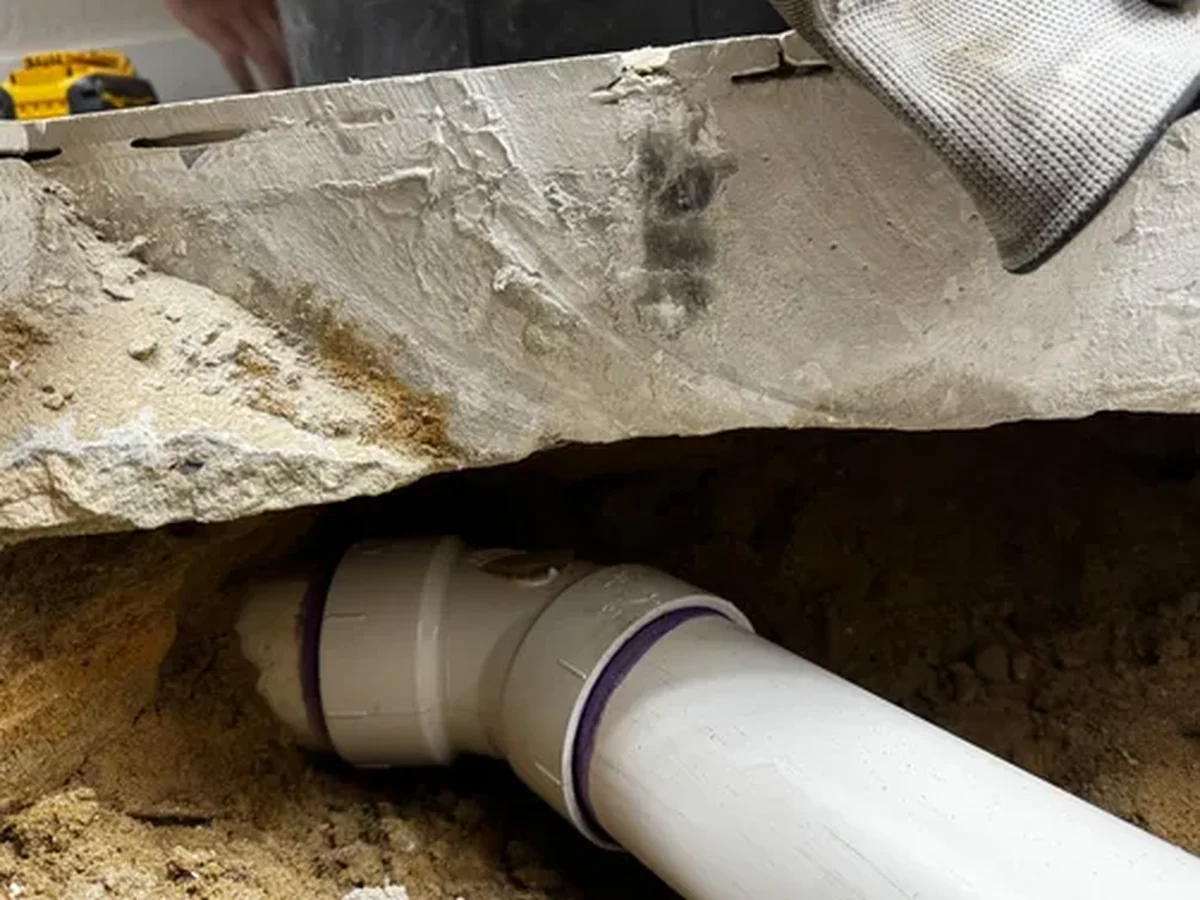
A sewage odor in the yard usually means the main line has a crack or a joint that has come apart underground, and waste is seeping into the surrounding soil instead of staying inside the pipe. You may also notice a soggy, sunken, or unusually green patch of grass tracing the line's path -- wastewater acts like fertilizer, so a leak can make one strip of lawn grow noticeably greener than the rest of the yard.
A sewage smell indoors, especially near a floor drain or a bathroom that isn't used often, points the same direction. Drain traps hold water that blocks sewer gas from coming back up; a dried-out trap can cause an odor on its own, with nothing wrong in the main line. But if the smell shows up alongside slow multi-fixture drainage, treat it as a main-line signal, not a coincidence.
What does gurgling in my drains mean?
Gurgling is trapped air pushing back up through standing water, and it happens when something downstream restricts flow enough to change the air pressure in the pipe. If your toilet gurgles when the washing machine drains, or a floor drain bubbles when you run the shower, that's air escaping backward because it can't move forward -- a strong indicator the shared line further down is partially blocked. Occasional gurgling after a heavy laundry load can be nothing; gurgling that's consistent, in more than one fixture, or getting more frequent is worth a look before it becomes a full backup.
Why does this happen more in older Florida homes?
A lot of the housing stock across Melbourne, Palm Bay, and the rest of Brevard County was built with cast-iron drain and sewer lines, and cast iron has a service life -- it corrodes and scales from the inside over decades, especially with the hard, mineral-heavy water common on the Space Coast. As the pipe interior narrows and roughens, it holds onto debris more easily and becomes more prone to blockage even under normal use.
Florida's slab-on-grade construction adds another wrinkle: for most homes here, the sewer line runs beneath the concrete foundation rather than under a crawlspace, so it isn't something you can easily inspect yourself. Sandy, shifting soil and aggressive tree roots common in this climate show up as slow, cumulative problems too -- a root finds its way into a hairline crack at a joint and gradually restricts flow over months or years before anything is visible above ground. None of that makes every backed-up drain in an older home an emergency -- but a cast-iron-era home that's never had its main line inspected is worth checking, especially alongside the multi-fixture and yard symptoms above.
How does a camera inspection settle it?
Because the sewer line is buried, every sign above is indirect -- backups, smells, and gurgling tell you something is wrong, but not where or how bad. A sewer camera inspection is the only way to actually see inside the pipe: a waterproof camera on a flexible cable is fed through a clean-out or access point, so the exact location of a crack, root intrusion, bellied section, or collapse shows up on the feed in real time. No digging, no guesswork -- it's what turns "the main line is bad" into a specific answer about whether you're looking at a small spot repair or something more involved.
Don't wait it out. A main sewer line problem tends to get worse, not better. A small crack that lets in tree roots today can become a collapsed section later. The earlier a camera confirms what's happening, the more options -- including less invasive repair methods -- stay on the table.
Quick self-check before you call
Before you pick up the phone, a few minutes of observation can help you describe the problem clearly:
- Flush a toilet and watch other fixtures. Water rising in a tub or shower when you flush is a strong main-line signal.
- Run water in more than one place. A floor drain or second bathroom reacting to water run elsewhere is a shared-line symptom.
- Walk the yard where you think the line runs. Look for soggy ground, a sunken strip, or grass noticeably greener than the rest of the lawn.
- Note the smell's location and timing. Odor that shows up with backups, rather than near one dry drain trap alone, points toward the main line.
Seeing These Signs?
Shaw Plumbing runs a camera-first sewer line diagnosis in Melbourne FL and across Brevard County.
Learn about our sewer line repair & replacement services →Frequently Asked Questions
Why do all my drains back up at the same time?
Because every fixture in your home drains into one shared main sewer line before it leaves the property. When that shared pipe is blocked, water backs up into whichever fixtures sit lowest, often the tub, shower, or floor drain, sometimes alongside the toilet -- all at once. A single slow drain that doesn't affect anything else is a local clog, not a main-line issue.
Is a sewage smell in the yard always a sewer line problem?
A persistent sewage smell tracing a line across the yard, especially with an unusually green patch of grass, usually means the main line has a crack letting waste seep into the soil. Combined with multi-fixture backups or gurgling, it's a strong sign the main line needs a camera inspection.
What's the difference between a clogged drain and a sewer line problem?
A clogged drain affects one fixture -- a sink or shower running slow while everything else works fine. A sewer line problem affects multiple fixtures at once, since they share the same downstream pipe. Gurgling in one drain when another runs water, and yard or odor symptoms, both point toward the main line rather than a single clog.
Why does a camera inspection matter more than guessing?
The sewer line is buried, so backups, smells, and gurgling only tell you something is wrong -- not where, or how serious. A camera fed through a clean-out shows the actual condition of the pipe, so the recommendation is based on what's really there, whether that's a small spot repair or something more involved.
Not Sure If It's the Main Line?
Serving the Space Coast since 2017 with 36 years of plumbing experience, Shaw Plumbing runs a camera-first sewer line diagnosis for Melbourne FL, Palm Bay, and Brevard County homeowners -- a straight answer instead of a guess.
Call (321) 626-6153Multiple Drains Backing Up?
Shaw Plumbing diagnoses sewer line problems with a camera first. Serving Melbourne FL and Brevard County.
(321) 626-6153 Request Estimate